The history of interior design is, at its core, a story about how people with taste, means, and imagination shape the spaces they live in. From painted caves and palatial tombs to loft apartments and smart homes, each era reveals what people valued, how they lived, and how they wanted to be seen.
Today, when you consider a penthouse renovation, a luxury condo, or a high-end investment property, you’re drawing on centuries of ideas. Understanding the history of interior design helps you make more confident, refined choices—whether you favor minimalist modernism, classical symmetry, or a curated blend of both.
Interior design’s origins reach back to ancient civilizations, but it became a defined profession only in the last century. Over time, interior design shifted from pure decoration for the elite to a sophisticated discipline that balances aesthetics, function, wellness, and sustainability for a far wider audience.2
The 20th century brought a new way of thinking about the history of interior design.1 Designers embraced simplicity and modern forms. Interior design became a recognized profession, supported by education, standards, and legislation. Today, the history of interior design continues as designers focus on healthy, environmentally responsible spaces, often supported by integrated smart-home technologies.1
Key Takeaways
The history of interior design stretches from prehistoric caves to 21st-century smart homes.
Ancient civilizations such as Egypt, Greece, and Rome laid the foundations for classic interior design styles.
The Middle Ages prioritized function, fortification, and faith, then evolved into the light-filled Gothic style.
The Renaissance, Baroque, and Rococo eras celebrated luxury, ornament, and artistic expression.
The 19th and early 20th centuries introduced Neoclassicism, the Victorian era, Art Nouveau, and Art Deco.
Modernism shifted the focus to “form follows function” and simpler, open interiors.
Interior design became a recognized profession just over 100 years ago and now spans many specializations.
Current trends in the history of interior design focus on sustainability, wellness, and technology-driven smart homes.
Contemporary spaces often blend historic references with modern comfort and performance.
Before Civilization: Prehistoric And Early Nomadic Interiors
The history of interior design begins long before palaces and villas. Early humans painted the walls of caves more than 20,000 years ago, creating powerful animal scenes and symbols. These images were likely ritualistic rather than decorative, yet they represent the first deliberate attempt to enrich an interior environment.
As societies shifted from nomadic hunting to settled agriculture, interiors slowly became more permanent and considered. Nomadic cultures, especially in Central Asia, mastered portable comfort through woven carpets and rugs. These textiles served as:
Flooring and insulation
Bedding and seating
Wall hangings that added warmth and color
The oldest known nomadic carpet, dating from the 5th century BC, already shows the sophisticated patterning that would influence interiors for millennia.
Simple platforms, animal skins, pottery, and carved wooden stools acted as early “furniture.” Their patterns carried symbolic meanings, reminding us that from the very beginning, interiors were about more than shelter—they expressed identity, belief, and status.
Ancient Roots: The Birth Of Interior Design
From around 3000 BC to 476 AD, interior spaces in Egypt, Mesopotamia, Greece, Rome, and Crete set many of the principles that still guide the history of interiors today, establishing foundational concepts of proportion, symmetry, and material use.3 Proportion, symmetry, color, and material all began to follow recognizable rules.
Egyptian Opulence: Decorating For The Afterlife

Ancient Egyptians believed interiors should serve both life and the afterlife. Homes and tombs displayed rich colors—deep reds, lapis blues, and shimmering gold—applied in murals, inlays, and gilded details.3
King Tutankhamun’s tomb, filled with gold, ivory, and intricate furniture, shows how strongly they linked interior design with power and eternity.4 Chairs and beds often featured legs carved like lion or bull limbs, symbolizing strength. The result feels both ceremonial and deeply luxurious—an early example of design as a statement of status.
Mesopotamia And Minoan Crete: Palaces And Frescoes
In Mesopotamia, palaces used glazed bricks in rich colors to decorate walls and courtyards. These surfaces often portrayed rulers, battles, or sacred animals, turning interiors into narratives of power.
On the island of Crete, the Minoans developed surprisingly airy, light-filled interiors. At the Palace of Knossos, columns, open courtyards, and frescoes of dolphins and dancers created a dynamic connection between architecture, art, and the surrounding setting. Their sense of flow and natural light still resonates with contemporary open-plan living.
Greek And Roman Influences: Balance And Symmetry
The Greeks valued harmony and simplicity. Their interiors favored straight lines, geometric shapes, and balanced proportions to create a calm, ordered atmosphere.3 Iconic pieces like the klismos chair, with its refined curved back and splayed legs, demonstrate how beauty and comfort can coexist.
The Romans adopted Greek principles but leaned into grandeur. They used marble, precious metals, complex mosaics, and frescoes to create immersive environments.3 Roman villas featured formal reception rooms arranged around courtyards, with water, sculpture, and patterned stone—an early blueprint for the luxurious, social interiors many high-end homes still echo.
The Middle Ages: Function, Faith, And Gothic Grandeur
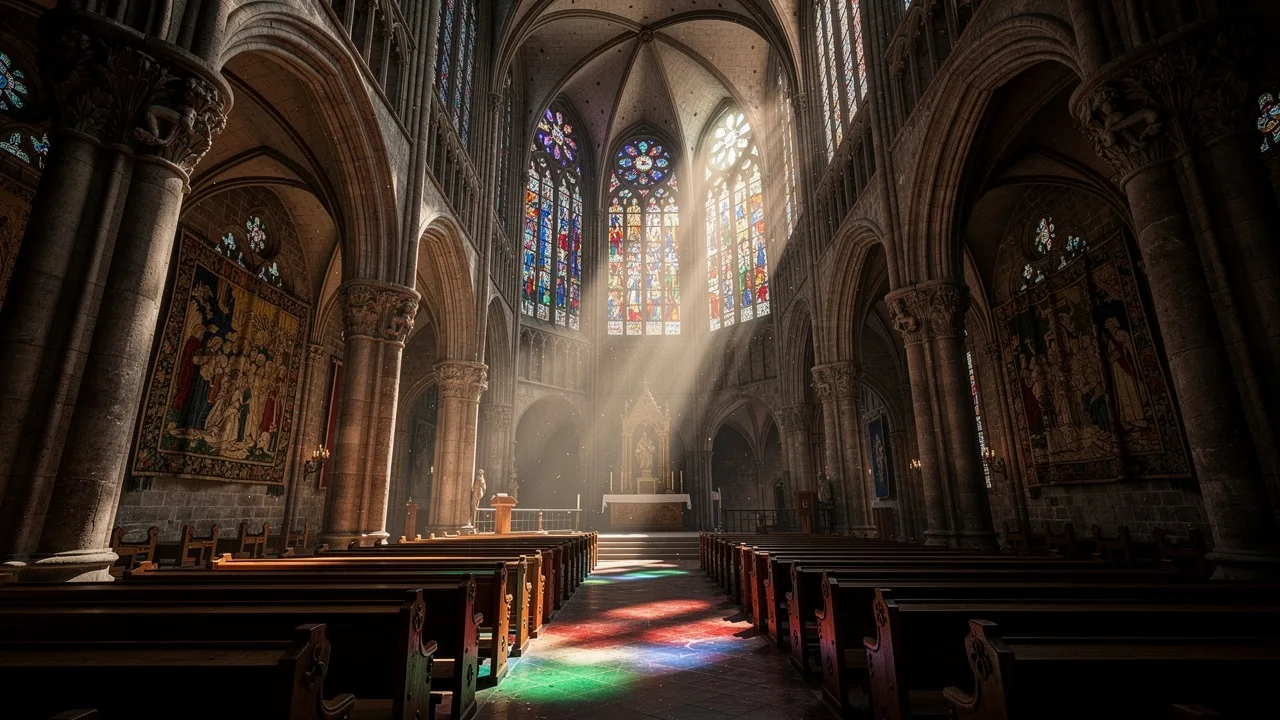
With the fall of Rome, the focus of interior design shifted. Security, faith, and practicality defined much of medieval life. Yet this period added its own chapter to the history of interior design, especially through castles, cathedrals, and candlelit interiors.
Medieval Functionality: Practicality In Design
Early medieval interiors, especially in castles, were designed first for defense. Great halls served as living, dining, and meeting spaces all at once. Heavy wooden trestle tables, benches, and large chests could be moved or packed up as needed. Stone walls offered protection but little comfort.
To soften these stark interiors, people hung tapestries—textiles that served both as insulation and art. They told stories of battles, legends, and religious scenes while warming otherwise cold stone rooms.
The Gothic style, emerging from the 12th century onward, changed how medieval spaces felt. Taller ceilings, pointed arches, and ribbed vaults allowed for thinner walls and much larger windows. Castles and churches featured finely carved stone and colorful stained-glass windows that filled interiors with colored light. These spaces were both purposeful and expressive, proving that even functional design can be visually rich.
Byzantine Splendor And Islamic Influence
In the Eastern Roman (Byzantine) Empire, interiors glowed with mosaics in gold and jewel tones. Walls and domes became luminous surfaces depicting saints and rulers, creating a sense of otherworldly luxury.
At the same time, the Islamic world developed intricate interiors characterized by geometric patterns, carved plaster, carved wood screens, and lush courtyards. Places like the Alhambra in Spain influenced European taste: the pointed arch, patterned tilework, and indoor–outdoor courtyards would echo through later Western design.
Interior design is not just about creating beautiful spaces; it’s about understanding the cultural, historical, and practical needs of those who inhabit them.
The history of interior design from ancient times through the Middle Ages shows a progression from ritual to comfort, from survival to expression. Old ideas continue to inspire new designers, revealing how layered and meaningful interior design history truly is.
Renaissance To Rococo: The Age Of Extravagance
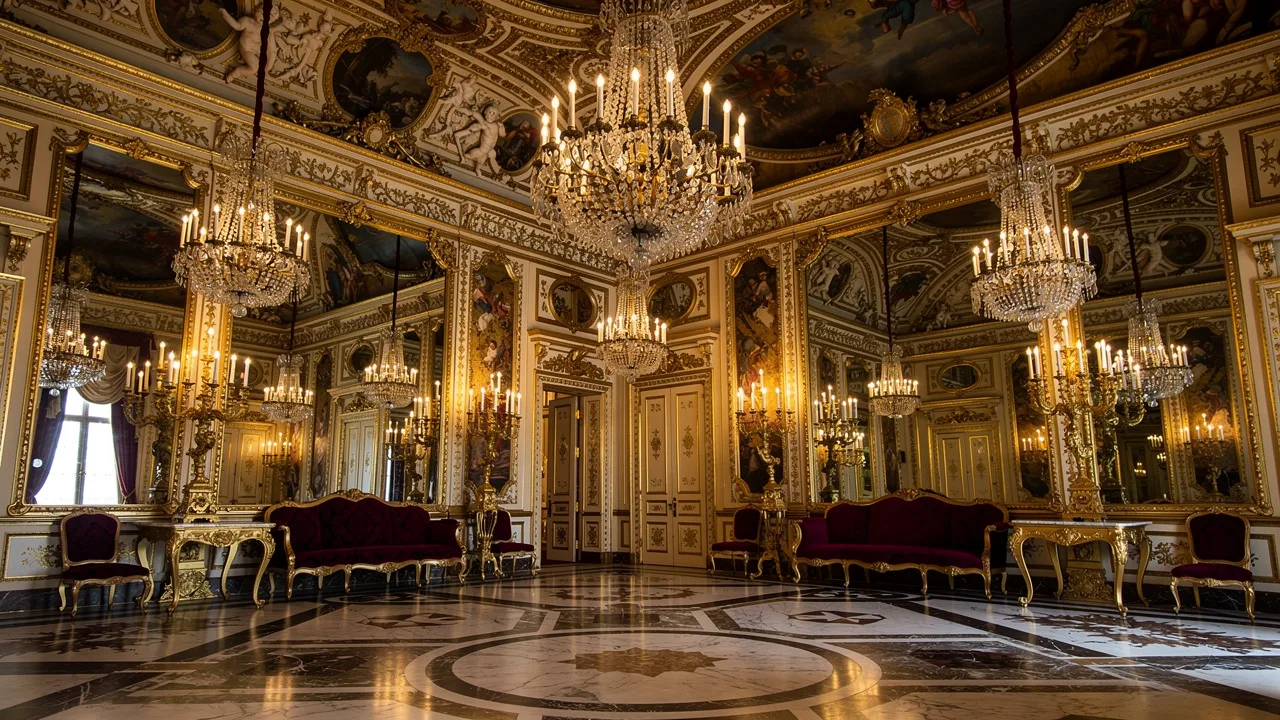
From about 1450 to 1600, the Renaissance reshaped European interiors. Designers revisited classical Greek and Roman ideas, emphasizing symmetry, proportion, and human-centered spaces. This era celebrated fine materials, elaborate details, and a refined sense of luxury.6
Walls became canvases for frescoes and tapestries, while furniture evolved into more specialized, elegant pieces—cabinets, consoles, and richly carved chests. Design aligned with art, science, and philosophy in a way that still appeals to clients who favor timeless, classical spaces.
The Baroque period that followed pushed luxury and drama even further, especially in Italy and Northern Europe. Buildings such as the church of S. Carlo alle Quattro Fontane in Rome by Francesco Borromini showcase complex geometries, sculpted surfaces, and theatrical light, all hallmarks of the Baroque style.7
Venetian palaces like the Doge’s Palace displayed elaborate plasterwork, gilding, and monumental ceiling paintings. These interiors were designed to impress, entertain, and communicate status.7
In the 18th century, Rococo emerged as a lighter, more playful answer to Baroque formality. Rococo rooms favored:
Soft pastel color palettes
Graceful, delicate furnishings
Asymmetrical, whimsical decorative elements
Rococo interiors highlighted the comfort and intimacy of noble life. Spaces such as the church of S. Lorenzo in Turin by Guarino Guarini show inventive domes, interlaced arches, and a sophisticated use of light that bridge Baroque and Rococo sensibilities.7
From the Renaissance to Rococo, each era introduced a new expression of European luxury. These periods still inspire high-end interiors today; modern designers look back to create spaces that are both luxurious and deeply functional.8
The History Of Interior Design: From Neoclassicism To Modernism
From the late 18th to the mid-20th century, the history of interior design accelerated. Styles shifted in response to archaeology, industrialization, social change, and technology.10 Neoclassicism, the Victorian era, Art Nouveau, Art Deco, and Modernism each reflect a distinct way of living.
Neoclassicism: Order, Restraint, And Classical Elegance
Neoclassicism emerged in the mid-18th century as a cooler, more structured response to Rococo. Inspired by discoveries at Pompeii and Herculaneum, designers returned to balanced proportions, straight lines, and motifs drawn from antiquity—swags, urns, laurel wreaths, and mythological figures.10
Furniture grew lighter and more refined, with tapered legs and subtle inlays. Neoclassical interiors still resonate with homeowners who appreciate clean lines, formal symmetry, and understated luxury.
Victorian Era: Ornate And Eclectic Interiors
From 1837 to 1901, the Victorian era celebrated abundance and variety.93 Fueled by the Industrial Revolution, decorative goods became widely available, and middle-class homeowners sought to display their success.
Victorian interiors often mixed Gothic, Renaissance, and Rococo revival elements in a single room. Rich colors, layered patterns, heavy curtains, and plentiful ornaments defined the style.9 The goal was visual richness—a feeling of comfort and prosperity that still appeals when curated with a lighter touch.
“Have nothing in your houses that you do not know to be useful or believe to be beautiful.”
— William Morris
This famous advice from designer and social reformer William Morris still guides many contemporary interiors that balance practicality with beauty.
Art Nouveau And Art Deco: Breaking Traditions
At the turn of the 20th century, Art Nouveau broke away from historical revivals with sinuous, nature-inspired forms.9 It treated the interior as a unified work of art, with architecture, furniture, lighting, and textiles designed together.
By the 1920s and 1930s, Art Deco replaced curves with strong geometry, symmetry, and a fascination with machinery and speed.9 Luxurious materials such as chrome, lacquer, glass, and exotic woods captured the glamour of the era. Both styles continue to inspire high-end residential projects—from curved staircases and stained glass to geometric inlays and sculptural light fixtures.9
Modernism: Form Follows Function
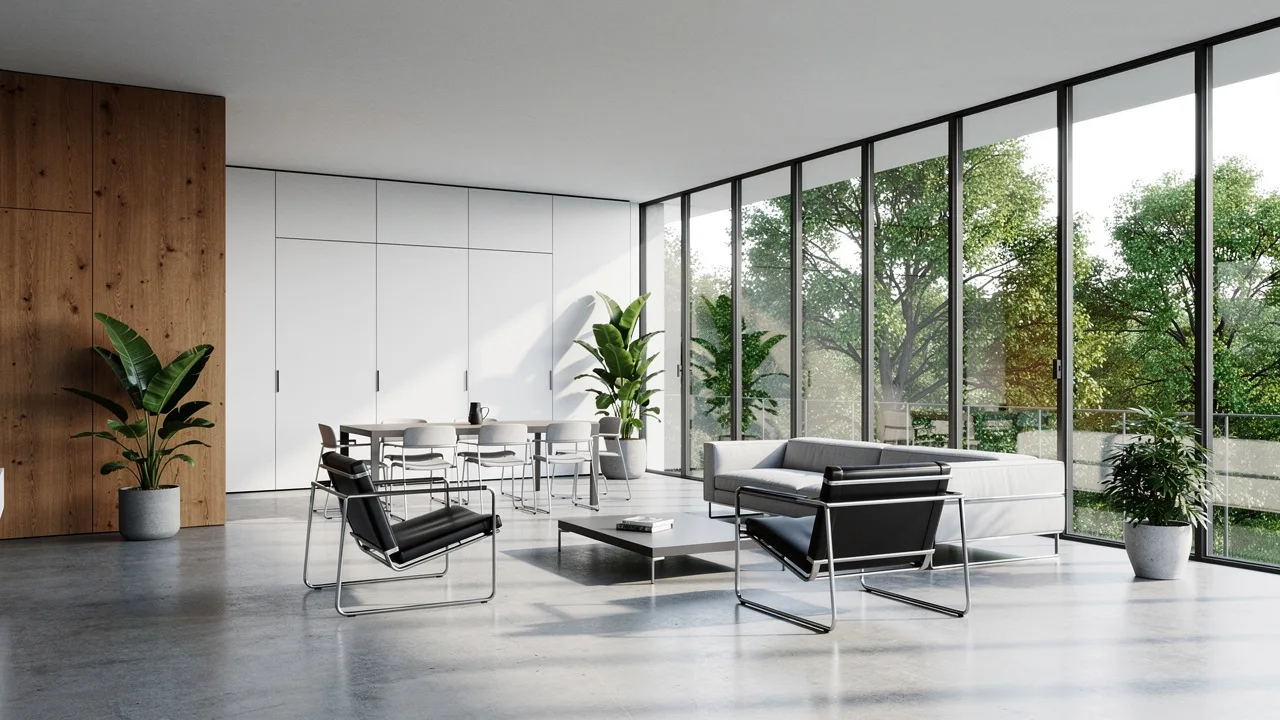
In the early 20th century, the Modernist movement made a decisive shift: function came first. Influenced by the Bauhaus School, designers removed ornament and focused on structural clarity, open plans, and honest materials like steel, glass, and concrete.
Modernist interiors favored simplicity and essentials:
Clean, linear forms and open floor plans
Built-in storage to reduce visual clutter
Industrial materials combined with natural finishes
Furniture was designed for everyday living and often for mass production, yet many pieces—such as cantilevered chairs and minimal sofas—remain design icons. These changes reflected people’s desire for simpler, more rational spaces and a clear break from the visual weight of the Victorian past.3
“Design is not just what it looks like and feels like. Design is how it works.”
— Steve Jobs
From Neoclassicism to Modernism, the history of interior design charts a clear pattern: interiors follow shifts in technology, culture, and the way people want to live.
Pioneers Of Interior Design: From Decorators To Designers
While people have shaped interiors for thousands of years, the idea of an interior designer as a trained professional is just over a century old. This chapter in the history of interior design begins with a few remarkable women.
Elsie De Wolfe: The First Professional Interior Decorator
Elsie de Wolfe is often called America’s first professional interior decorator. Starting around 1905, she rejected the dark, crowded Victorian style in favor of light, comfortable, and airy rooms. She favored pale walls, painted furniture, and gracious layouts that suited modern living rather than strict formality.
Her 1913 book, The House in Good Taste, helped define tasteful residential interiors for a new generation of affluent clients. De Wolfe showed that a designer could bring a consistent vision to a home and be compensated as a professional, not an amateur hostess.
Dorothy Draper: Drama For Public Spaces
Dorothy Draper took interior decoration into the public realm. In 1923, she founded one of the first interior design firms dedicated to large-scale commercial projects—hotels, clubs, and public lobbies.
Draper’s style was bold and theatrical: oversized patterns, high-contrast color, and confident gestures often described as “Modern Baroque.” Her work proved that interior design could shape the identity and success of commercial properties, not just private homes.
From Interior Decorator To Interior Designer
As the field matured, the title “interior decorator” no longer captured the full scope of the work. By the 1930s, publications such as Interior Design and Decoration promoted the term interior designer to reflect deeper technical knowledge—space planning, building codes, lighting, materials, and human behavior, not only surface decoration.
Professional organizations reinforced this shift:
1931: Formation of the American Institute of Interior Decorators (AIID).
Later renamed the American Institute of Decorators (AID), then American Institute of Interior Designers as responsibilities broadened.
1957: The National Society of Interior Designers (NSID) formed.
1975: AID and NSID merged into the American Society of Interior Designers (ASID), still a leading professional body.
1994: Several groups joined to form the International Interior Design Association (IIDA), reflecting the field’s global and commercial reach.
Education and standards followed:
1970: The Foundation for Interior Design Education Research (FIDER)—now the Council for Interior Design Accreditation (CIDA)—began accrediting degree programs.
1974: The National Council for Interior Design Qualification (NCIDQ) launched a comprehensive exam to assess professional competence.
1982 onward: States began recognizing interior design by law, regulating who may use the title and sign off on certain types of work.
This professionalization is a key part of the history of interior design. Today’s designers blend creativity with safety, accessibility, and performance—especially important for luxury residences, medical suites, and hospitality properties.
Global Influences: Asian Traditions In Interior Design
The history of interior design is often told through Western Europe and North America, but Asian traditions have shaped interiors just as profoundly. Chinese, Japanese, and Indian approaches offer distinct philosophies that fit remarkably well with contemporary luxury living.
Traditional Chinese Interiors: Harmony And Feng Shui
Chinese interiors are grounded in balance and symbolism. Feng Shui principles guide room orientation, circulation, and the placement of furniture to support well-being and prosperity.
Common elements include:
Dark, lacquered woods contrasted with lighter stone or plaster
Intricately carved lattice screens that divide space without fully closing it off
Symbolic motifs—dragons, cranes, peonies—representing power, longevity, and abundance
This emphasis on order, symmetry, and symbolism translates well to modern homes that seek both calm and meaning.
Japanese Design: Minimalism And Nature
Japanese interiors are defined by simplicity, natural materials, and a strong connection to the garden. Spaces are flexible, with sliding shoji and fusuma panels creating rooms that can expand or contract.
Key characteristics:
Minimal furniture and a focus on negative space
Light woods, paper screens, stone, and woven tatami mats
Large openings to courtyards or terraces for indoor–outdoor continuity
For clients who appreciate clean lines and serenity, Japanese influences offer a timeless counterpoint to ornate Western styles.
Indian Aesthetics: Color, Craft, And Spirituality
Traditional Indian interiors celebrate color and craftsmanship. Hand-carved wood, inlaid stone, embossed metals, and richly woven textiles create layered, inviting rooms.
Features often include:
Bold color palettes—saffron, ruby, emerald, deep blue
Intricate screens and arches that filter light
Dedicated spaces for worship or reflection, seamlessly integrated into daily life
For large family homes or villas, Indian design elements can introduce warmth, generosity, and a sense of story.
Timeline: The History Of Interior Design At A Glance
Below is a concise view of the history of interior design, from ancient ceremonial interiors to today’s connected homes:
Era / Civilization | Approx. Dates | Dominant Style / Movement | Signature Interior Features |
|---|---|---|---|
Prehistoric & Nomadic | 20,000 BC–c. 3000 BC | Cave Interiors, Early Textiles | Cave paintings, basic hearths, woven rugs and carpets in tents |
Ancient Egypt | c. 3000–332 BC | Egyptian Opulence | Bright murals, gold, symbolic furniture, tomb interiors for the afterlife |
Mesopotamia & Minoan Crete | c. 3000–1100 BC | Palatial Interiors | Glazed brick walls, colorful frescoes, early courtyards |
Ancient Greece | c. 1200–31 BC | Classical Harmony | Proportion, symmetry, geometric mosaics, elegant wood and stone furniture |
Roman Empire | 753 BC–476 AD | Imperial Grandeur | Marble, mosaics, frescoed walls, formal atriums and villas |
Byzantine & Islamic Worlds | 4th–15th centuries | Mosaic & Patterned Interiors | Gold mosaics, ornate tilework, courtyards, carved plaster and wood |
Medieval Europe | 5th–15th centuries | Castle & Gothic | Great halls, tapestries, ribbed vaults, stained glass |
Renaissance | 1450–1600 | Classical Revival | Symmetrical rooms, frescoes, carved furniture, coffered ceilings |
Baroque | 1600–1750 | Dramatic Luxury | Complex plans, gilding, mirrors, illusionistic ceilings |
Rococo | 1730–1770 | Playful Elegance | Pastels, asymmetry, delicate furnishings, intimate salons |
Neoclassicism | Mid-18th–early 19th | Ordered Classicism | Straight lines, classical motifs, refined color palettes |
Victorian Era | 1837–1901 | Eclectic Ornamentation | Patterned wallpapers, rich textiles, dense furnishings |
Art Nouveau | c. 1890–1910 | Organic Modernity | Curving lines, floral motifs, unified interiors |
Art Deco | 1920s–1930s | Geometric Glamour | Bold geometry, chrome, lacquer, luxurious surfaces |
Modernism & Bauhaus | 1920s–1960s | Functional Minimalism | Open plans, steel and glass, minimal ornament |
Mid- to Late 20th Century | 1950s–1990s | Modern, Postmodern, Eclectic | Mix of modernist clarity and expressive forms |
21st-Century Smart Home | 2000s–Present | Sustainable, Connected Design | Integrated tech, sustainable materials, wellness-focused planning |
This overview shows how the history of interior design moves from symbolic decoration to carefully considered, responsive environments.
21st-Century Interior Design: Sustainability, Wellness, And Smart Homes
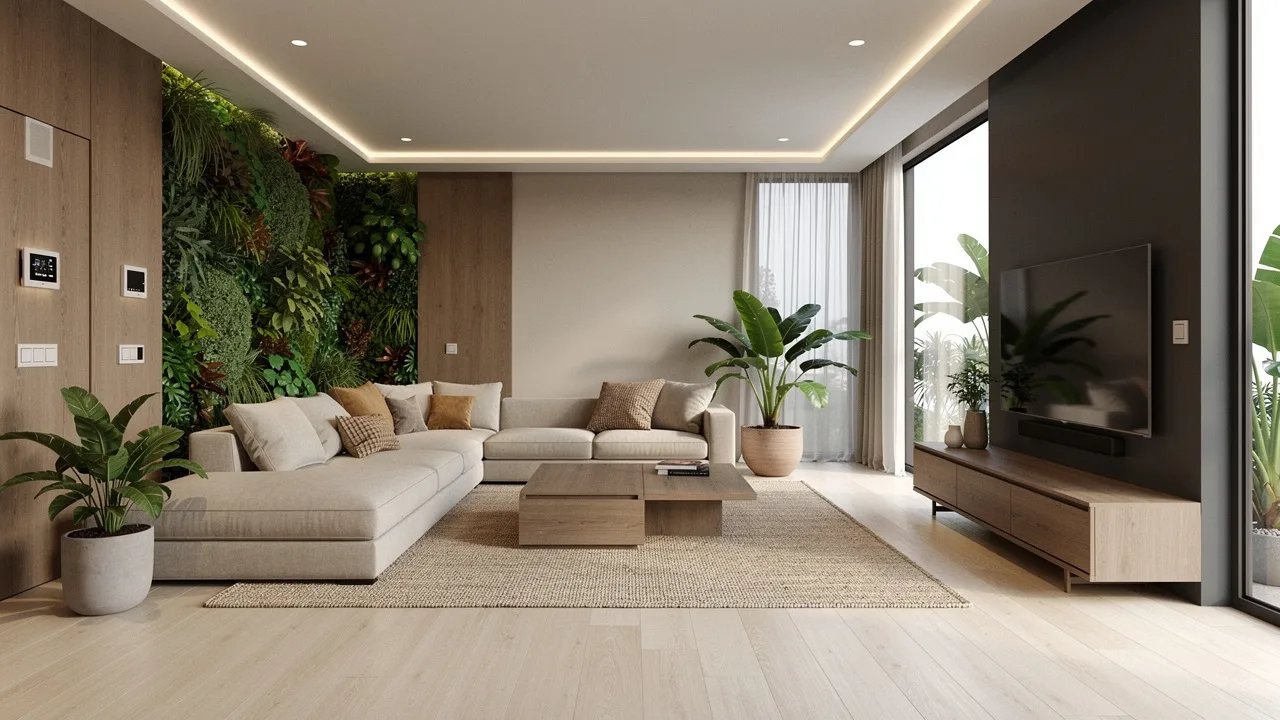
The most recent chapter in the history of interior design focuses on how spaces make people feel and function day to day. Beauty still matters, but so do health, environmental impact, and technology.
Key directions include:
Sustainable and green design: Preference for low-VOC paints, responsibly sourced woods, recycled materials, and energy-efficient lighting and appliances.
Wellness and biophilic design: Introducing natural light, greenery, water features, and organic materials to reduce stress and support well-being.
Universal design and aging in place: Creating homes that are comfortable and safe for all ages and abilities—wider clearances, step-free showers, intuitive hardware.
Specialized environments: Healthcare, education, co-working, and hospitality interiors each demand focused, specialized expertise.
Smart homes: Integrated control of lighting, climate, shading, and security; adaptive lighting scenes; and discreet technology that supports rather than dominates the aesthetic.
For affluent homeowners, urban professionals, and property investors, the opportunity lies in combining lessons from the history of interior design—classical proportion, Art Deco glamour, Japanese calm—with smart systems and sustainable choices. The result is a home that feels both timeless and completely current.
FAQ
What Is Interior Design?
Interior design is more than making spaces look attractive. It is the art and science of planning and detailing interior environments so they are beautiful, comfortable, safe, and practical. A designer considers layout, light, materials, acoustics, and furniture to create spaces that support how people actually live and work.
How Old Is The Profession Of Interior Design?
People have been shaping interiors for thousands of years, but the profession of interior design is just over 100 years old. In the early 1900s, pioneers such as Elsie de Wolfe and Dorothy Draper began taking paid commissions and publishing their work. By the 1930s, the term “interior designer” began to replace “interior decorator,” reflecting a more technical, standards-based profession supported by education and licensing.
What Are The Origins Of Interior Design?
The roots of interior design reach back to ancient Egypt, Greece, and Rome. Egyptians used vivid colors, gold, and symbolic furniture; Greeks favored balanced, harmonious spaces; Romans added grandeur with marble, mosaics, and expansive villas. Over centuries, styles evolved in response to new materials, technologies, and cultural priorities, forming the rich history of interior design we reference today.
What Were Some Notable Design Styles Throughout History?
Design styles vary widely across the history of interior design. Highlights include:
Egyptian opulence and symbolic decoration
Greek and Roman balance and symmetry
Medieval castle interiors and Gothic cathedrals
Renaissance, Baroque, and Rococo luxury
Neoclassical restraint and Victorian eclecticism
Art Nouveau’s organic curves and Art Deco’s geometric glamour
Modernist, minimalist interiors focused on function
Each style reflects the values and technologies of its time.
How Has The Role Of Interior Design Changed Over Time?
Historically, interior design was reserved for royalty and the very wealthy, focused primarily on display and ceremony. Today, well-designed spaces are accessible to many more people, and the designer’s role is broader. Modern interior designers consider sustainability, wellness, accessibility, safety codes, and technology integration alongside aesthetics. The history of interior design shows a clear shift from ornament alone to a thoughtful balance of beauty, comfort, and performance for every type of space.